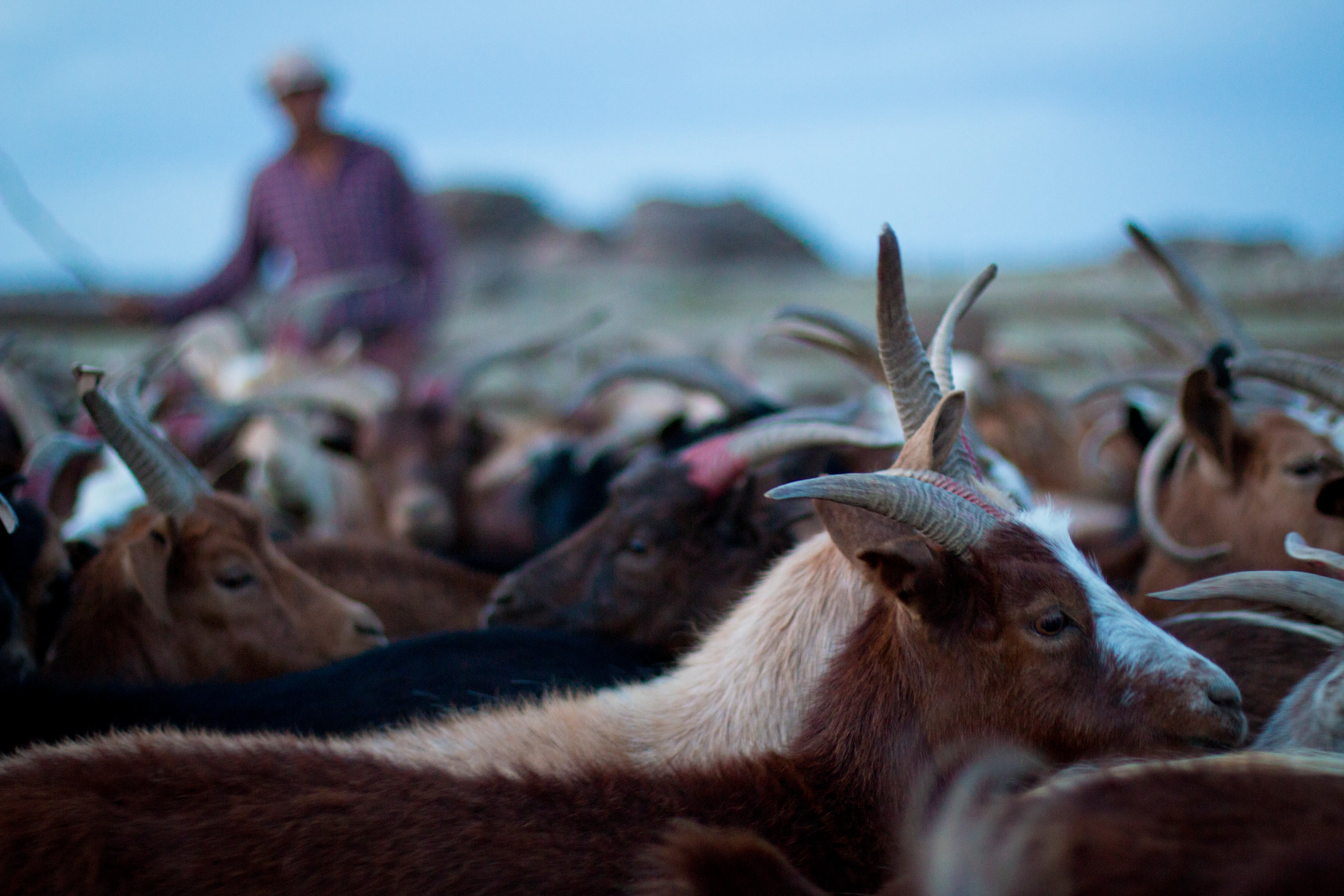
Cashmere is the fine undercoat of cashmere goats, separated from coarser outer hair through dehairing. Diameter, length and preparation help define the selected material. Its final character also depends on the yarn and textile construction, so a cashmere product is developed through more than fibre choice alone.
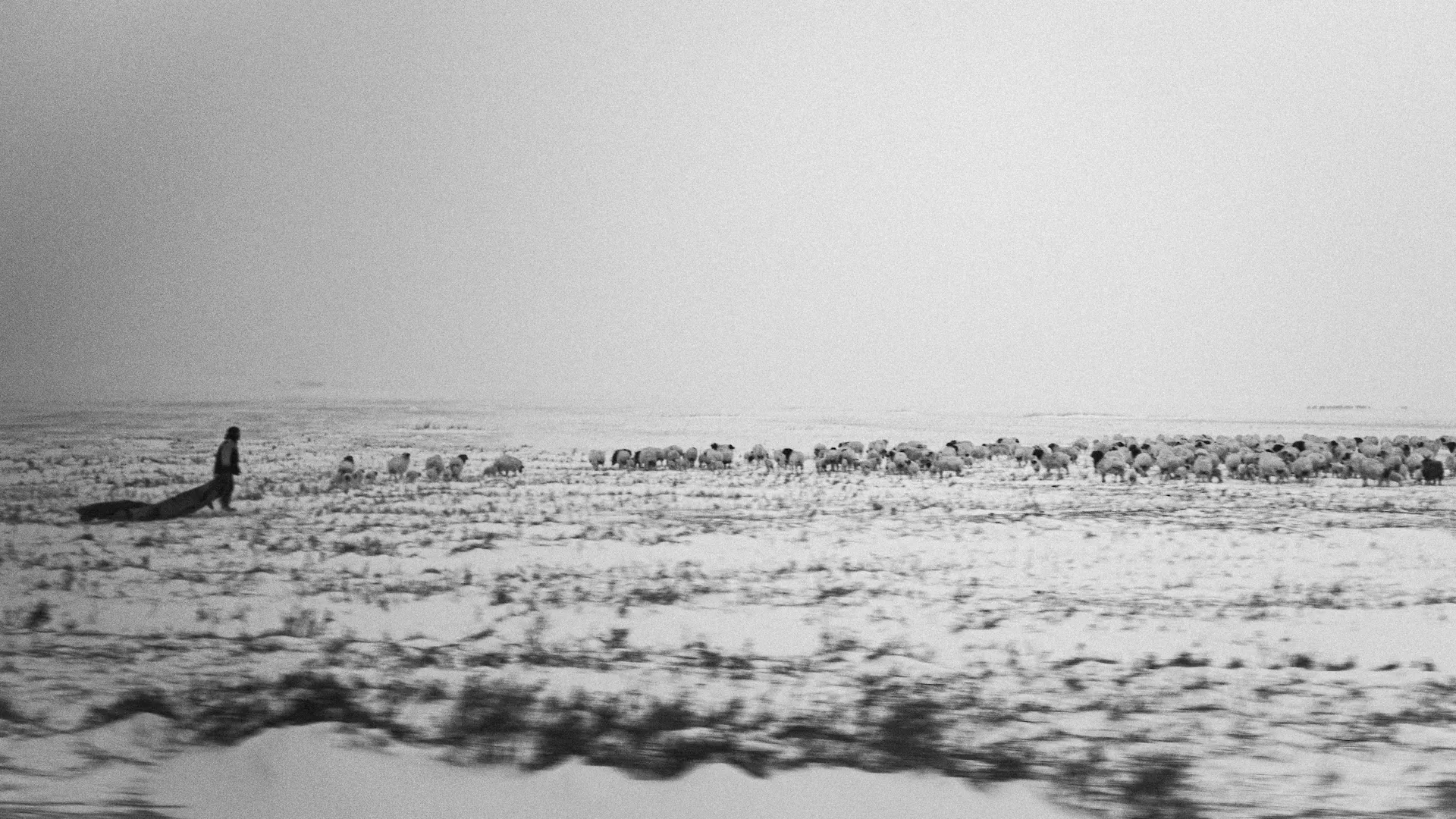
Mongolian natural fibres
Fibre
Explore cashmere, yak down, camel wool and sheep wool. Fibre characteristics, yarn construction and finishing together shape the feel and performance of the finished textile.
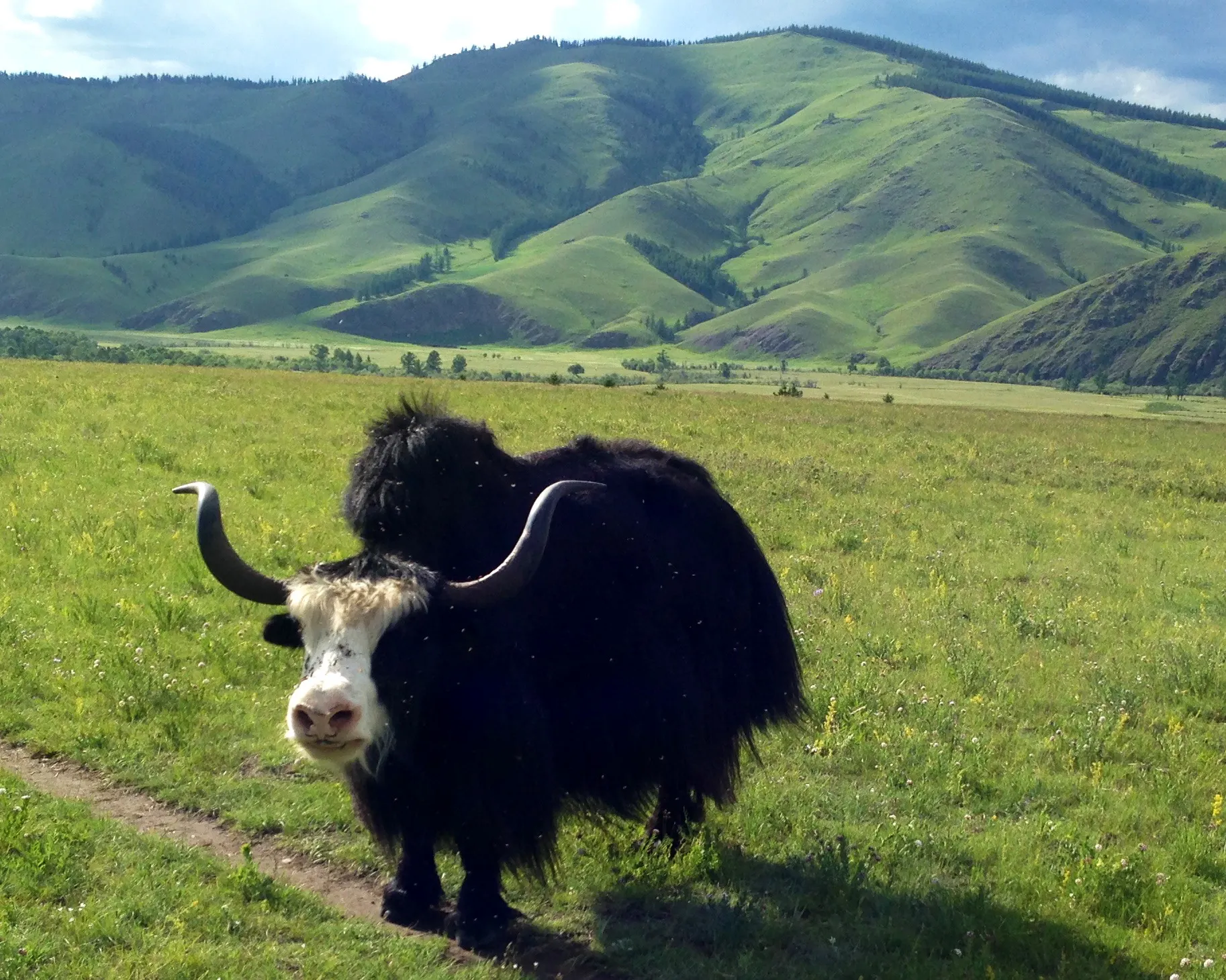
Yak Down
Yak down is the fine inner fibre of the yak's coat, distinct from the coarser protective hair. Separation and preparation are important before spinning. The selected grade, natural shade and yarn construction help determine how the material can be developed into a knitted product or woven accessory.
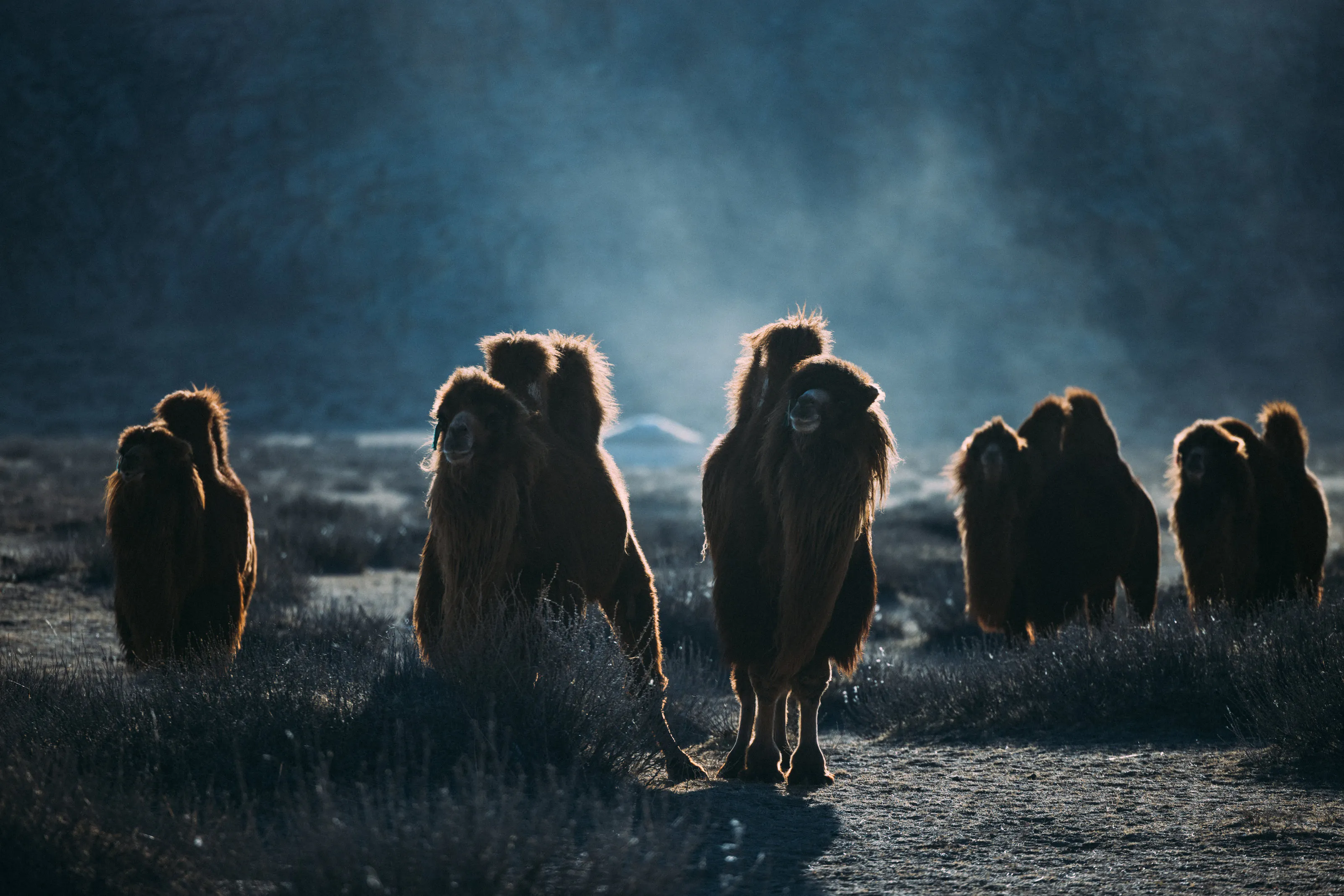
Camel Wool
Bactrian camels have a fine undercoat beneath their coarser outer hair. Textile grades differ in diameter, length and coarse-hair content. Natural colour can be part of a design, while yarn construction and finishing shape the weight, surface and drape of the completed textile.
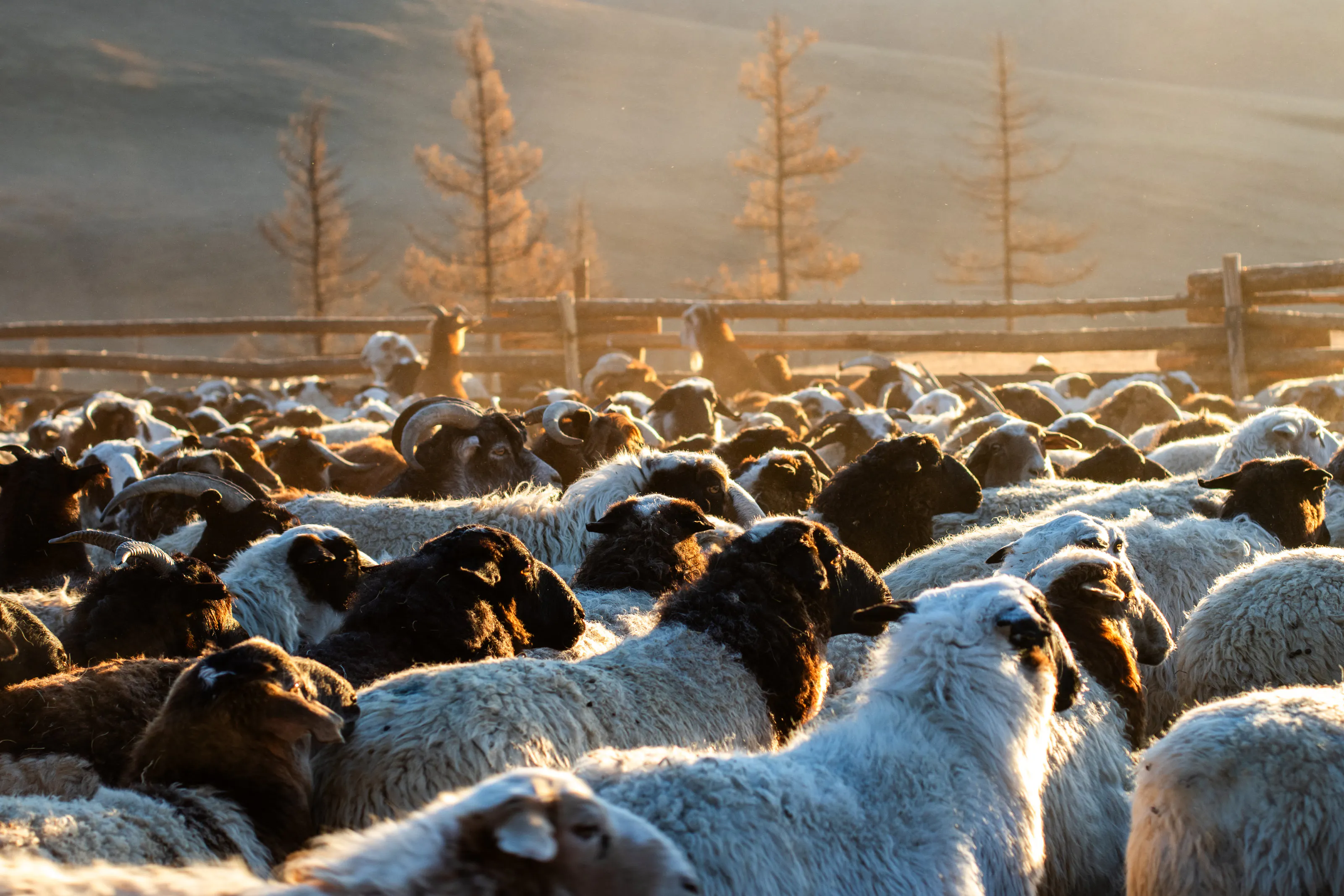
Mongolian Sheep Wool
Sheep wool is a natural protein fibre with a wide range of diameters, lengths and textures. Mongolian origin describes its source, not a single fineness grade. The selected material and its preparation are considered alongside the yarn, construction and finish required for the product.
Choosing your material
Find the right fibre for your product
Fibre selection connects the intended use with the textile's feel, weight and construction. Cashmere, yak down, camel wool and sheep wool each vary within their own material category, so a useful comparison considers the selected grade and finished sample rather than the fibre name alone.
01 · Fineness
Fibre diameter and feel
Diameter describes how fine a fibre is and is usually measured in microns. It is important to softness, particularly for products worn against the skin. It does not describe the entire textile: yarn structure, surface and finishing also contribute to the feel.
02 · Preparation
Length and fibre preparation
Fibre length and preparation affect the material available for spinning. Cleaning and, where appropriate, dehairing have different roles: one removes unwanted matter, while the other separates fine down from coarser outer hair. The prepared material must suit the intended yarn.
03 · Construction
Yarn, stitch and weave
Yarn count describes linear density, while ply and twist describe aspects of yarn construction. Knitting forms loops; weaving interlaces warp and weft yarns. These choices change the weight, texture and drape of a product made from the same fibre type.
04 · Finishing
Evaluate the finished textile
Finishing develops the textile's final surface and handle, meaning how it feels in the hand. A finished knitted or woven sample provides a more complete comparison than loose fibre alone, because it brings material, construction and finish together.
The manufacturing process explains how these material choices become yarn, flat-knitted products and woven accessories.
Explore production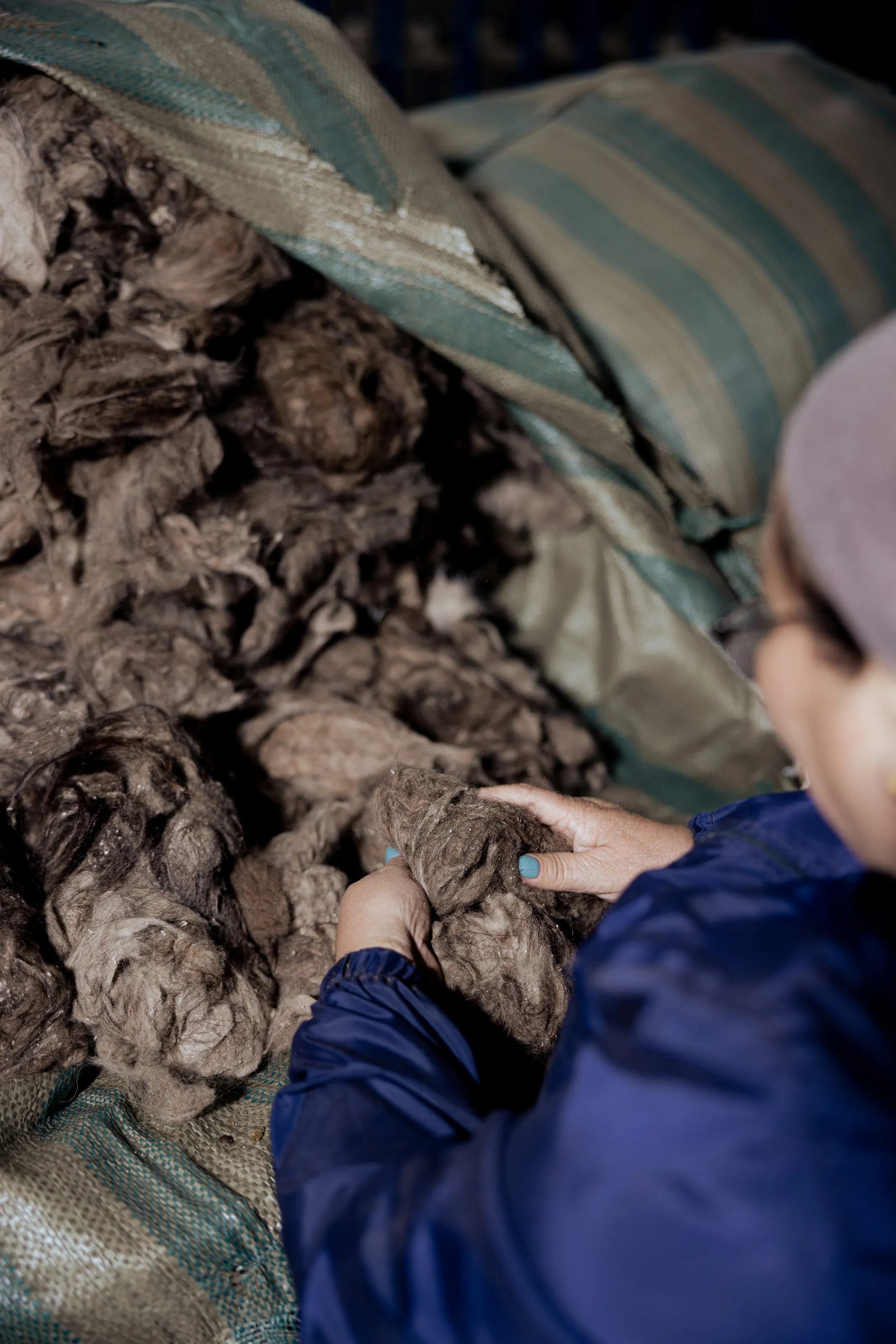
Materials
Materials and product development
Our team can discuss fibre choice alongside the yarn, construction and feel you have in mind.