Fibre

Fibre

Yak Down

Yak down comes from the winter coat of an animal adapted to Mongolia’s high mountain pastures, where fibre is one part of a much broader herding life.

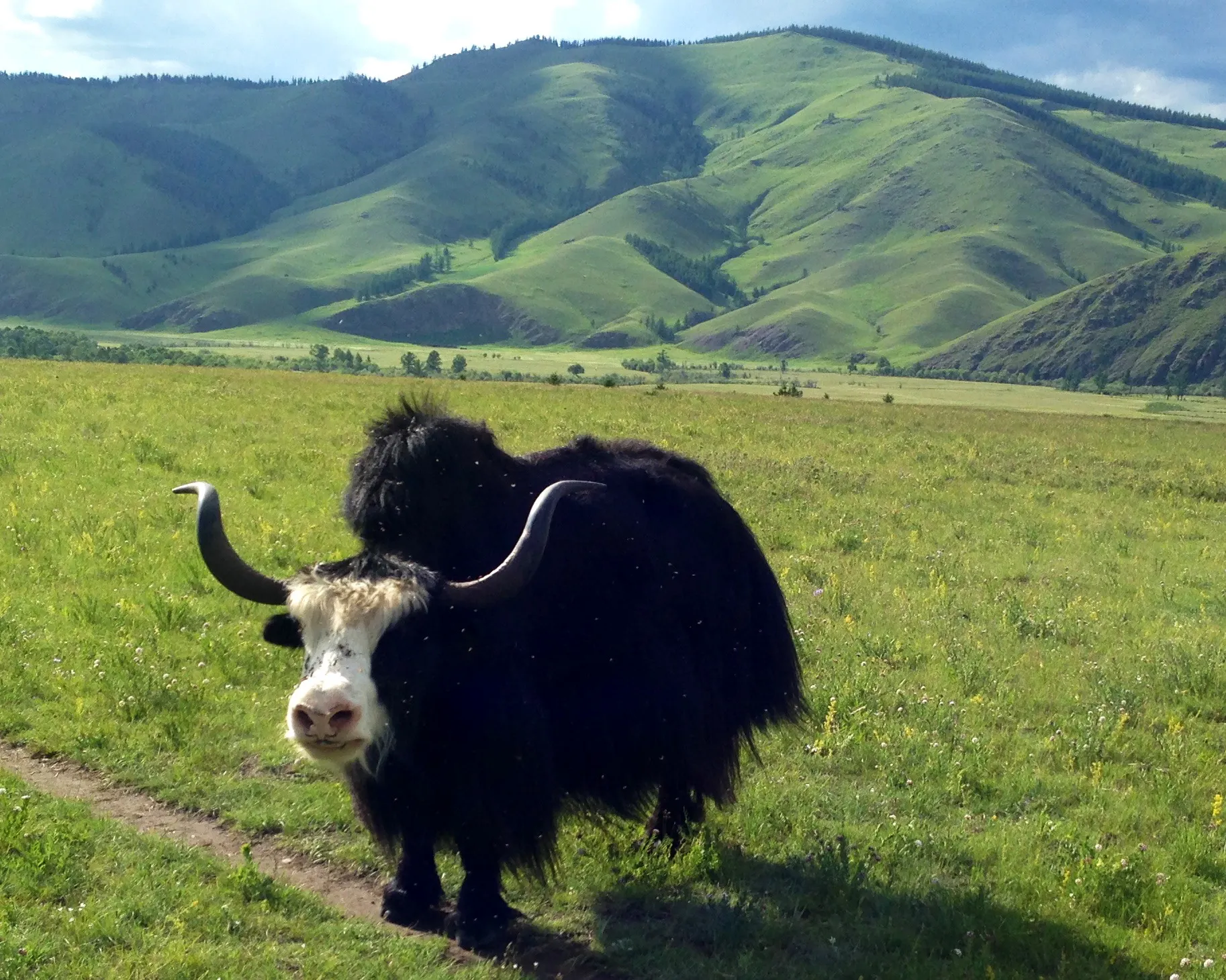
A dark yak standing on green pasture below mountains.

The animal

An animal of the high pastures

Yaks are adapted to cold, steep mountain country. Their coat combines long protective hair with a fine down layer that grows for winter insulation and is shed as the warmer season arrives. That inner layer is the material used for soft yak-down textiles.
Herders and culture

More than a fibre animal

In Mongolia’s highland communities, yaks provide milk, meat and transport as well as fibre. Seasonal movement between lower winter ground and higher summer pasture is part of the husbandry described in these mountain regions.

This gives yak down a different context from an animal raised solely for its coat. The fibre is one contribution to a livelihood shaped by terrain, a short growing season and the demands of winter.

Fibre character

Warm down and a strong natural palette

The fine down offers insulation and a soft handle, while brown, grey and other natural shades give it a distinctive visual character. The long outer hair is much coarser; it should not be treated as equivalent to fine down.

Separation of the coat fractions matters to skin comfort. Residual coarse hair can make an otherwise soft textile feel rough, and a darker natural base constrains pale or bright colour results. Yak down’s character is therefore inseparable from both its fine inner fibre and its starting shade.

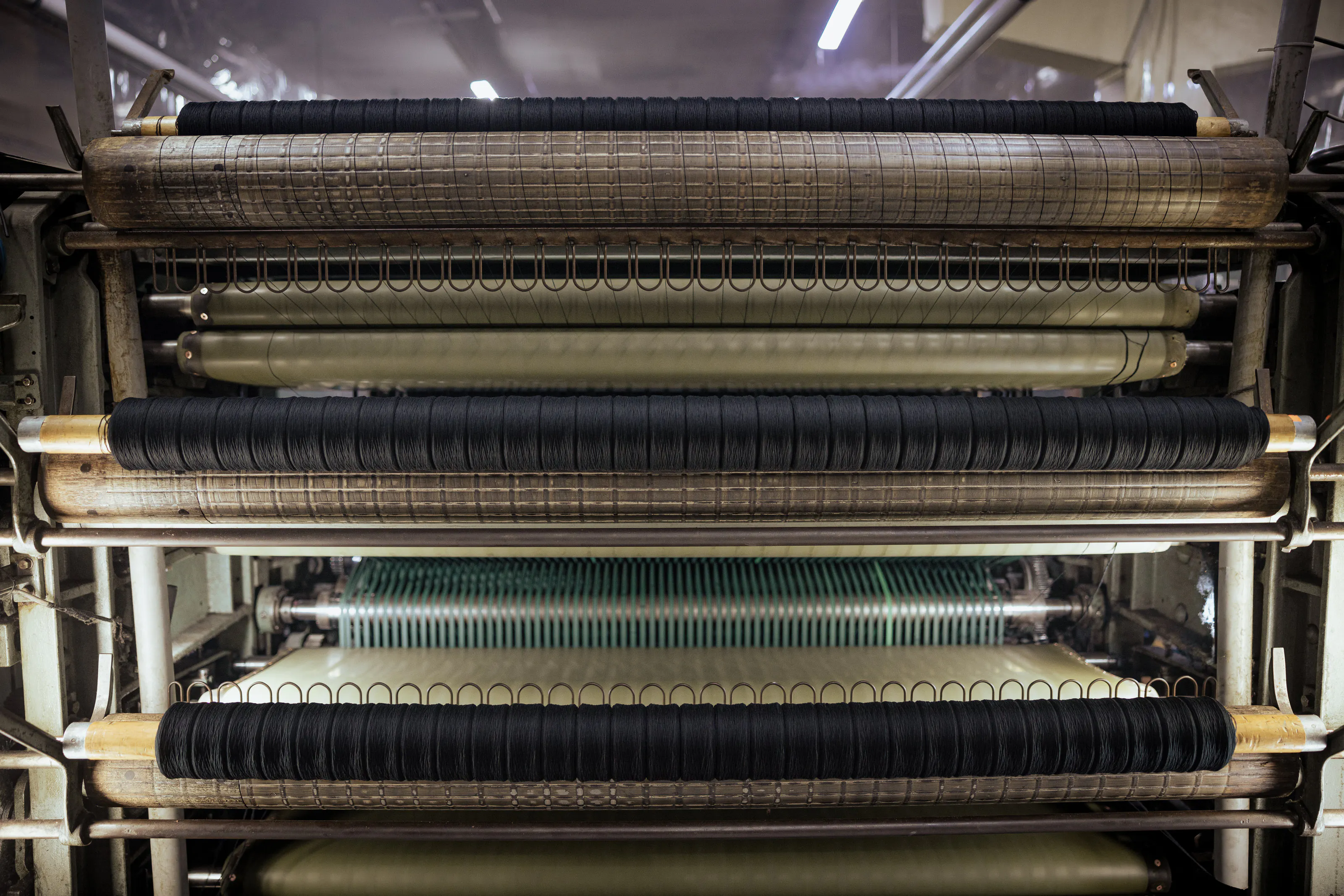
Wide view of yarn-handling machinery.

Fibre into product

Working with yak down

Connect the character of yak down with a yarn or finished-product project.