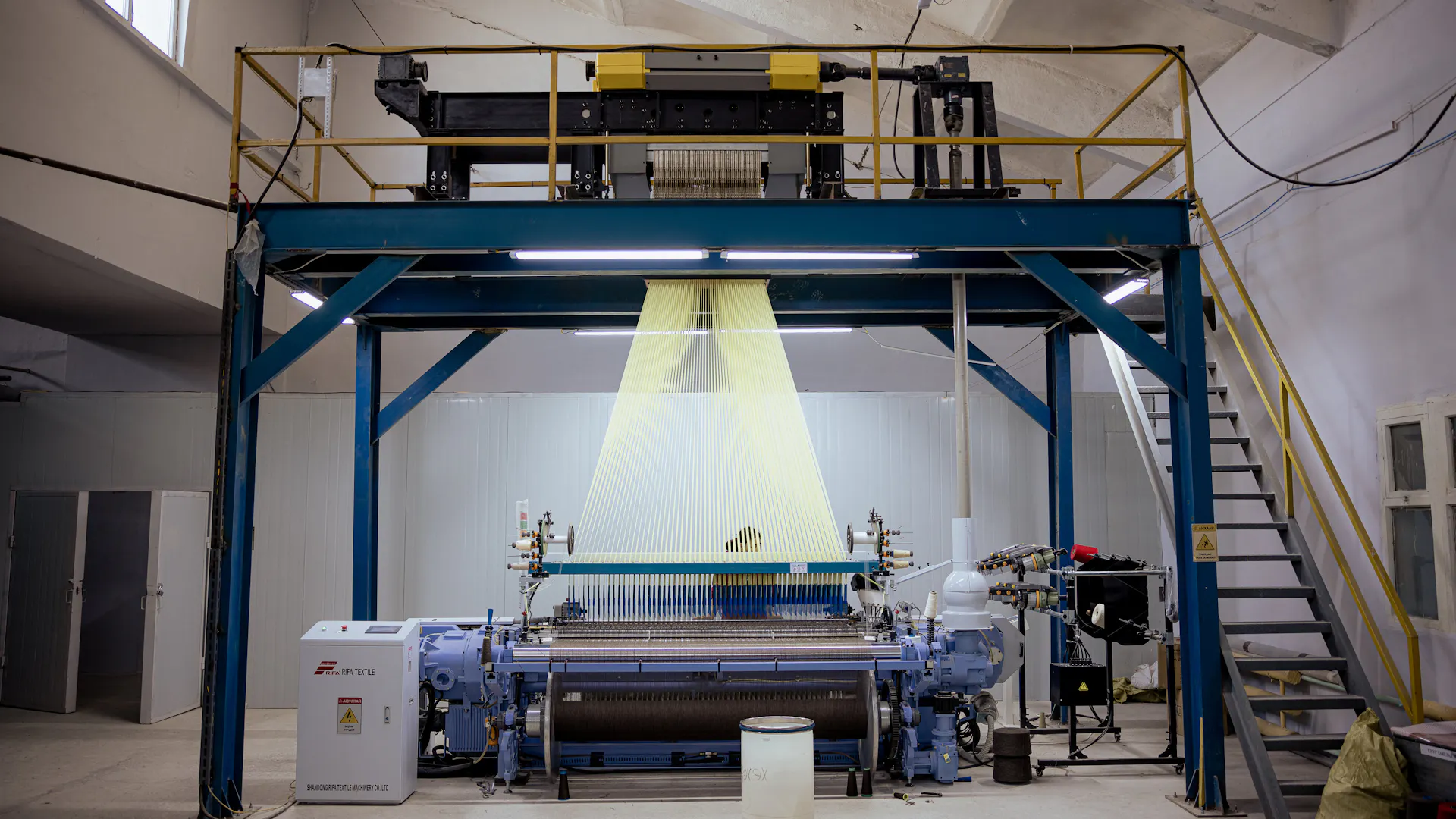

Wide view of a large loom inside a workroom.

From fibre to finished product

See how your product is made.

Prepared natural fibre moves through colour development where required, mixing and spinning, then weaving or flat knitting. The selected finishing route determines the final surface, handle and dimensions. Yarn supply leaves the route before product construction.

A mounted herder beside a flock under storm clouds.

Sourcing

Fibre identity, preparation condition and natural shade establish the starting material for the mill.

Fine down and coarse outer hair need to be distinguished. Preparation, length and natural shade influence how the selected lot moves through the mill.

Explore sourcing

Dyeing & Colour Lab

Loose-fibre colour development connects the starting shade with mixing, spinning and the finished surface.

Natural base shade, fibre mixture and finishing influence the colour seen in the completed textile. A loose-fibre reference must be considered alongside the final knitted or woven surface.

Explore dyeing
Pastel and earth-coloured yarn cones arranged on a shelf.
Close-up of dark yarn passing over a roller and metal guides.

Spinning Mill

Mixing, carding, spinning, rewinding, doubling and twisting establish the yarn for its next process.

Count, ply and twist need to suit the receiving knitting or weaving process. Yarn can be supplied separately or continue into finished-product manufacturing.

Explore spinning

Textile Mill

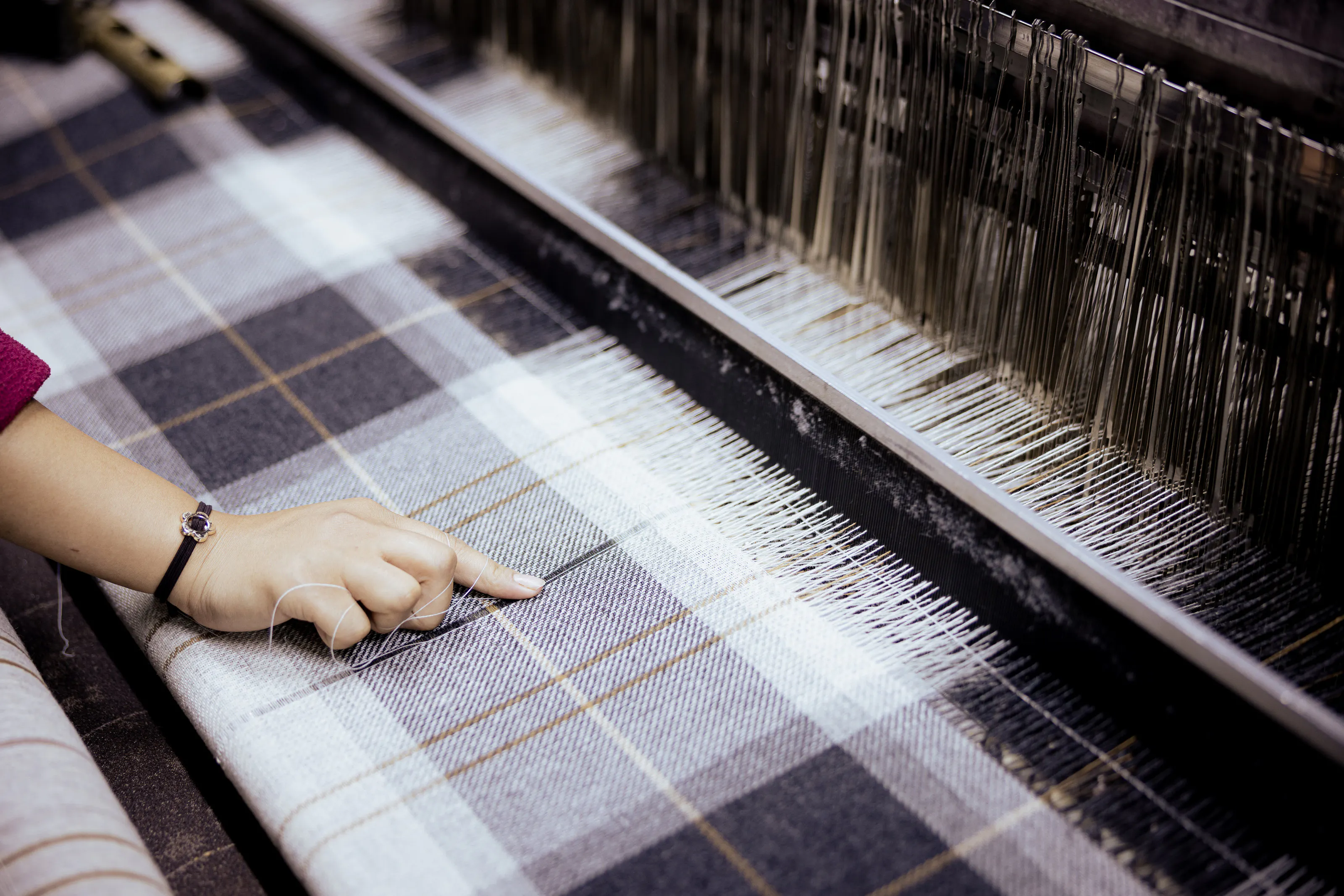
Warp preparation, weaving and selected finishing produce complete woven accessories.

Weave construction and finishing are assessed together: the selected finish develops the accessory’s dimensions, handle and surface. The finished item is the reference for review.

Explore weaving and finishing
A hand beside checked textile on a loom.
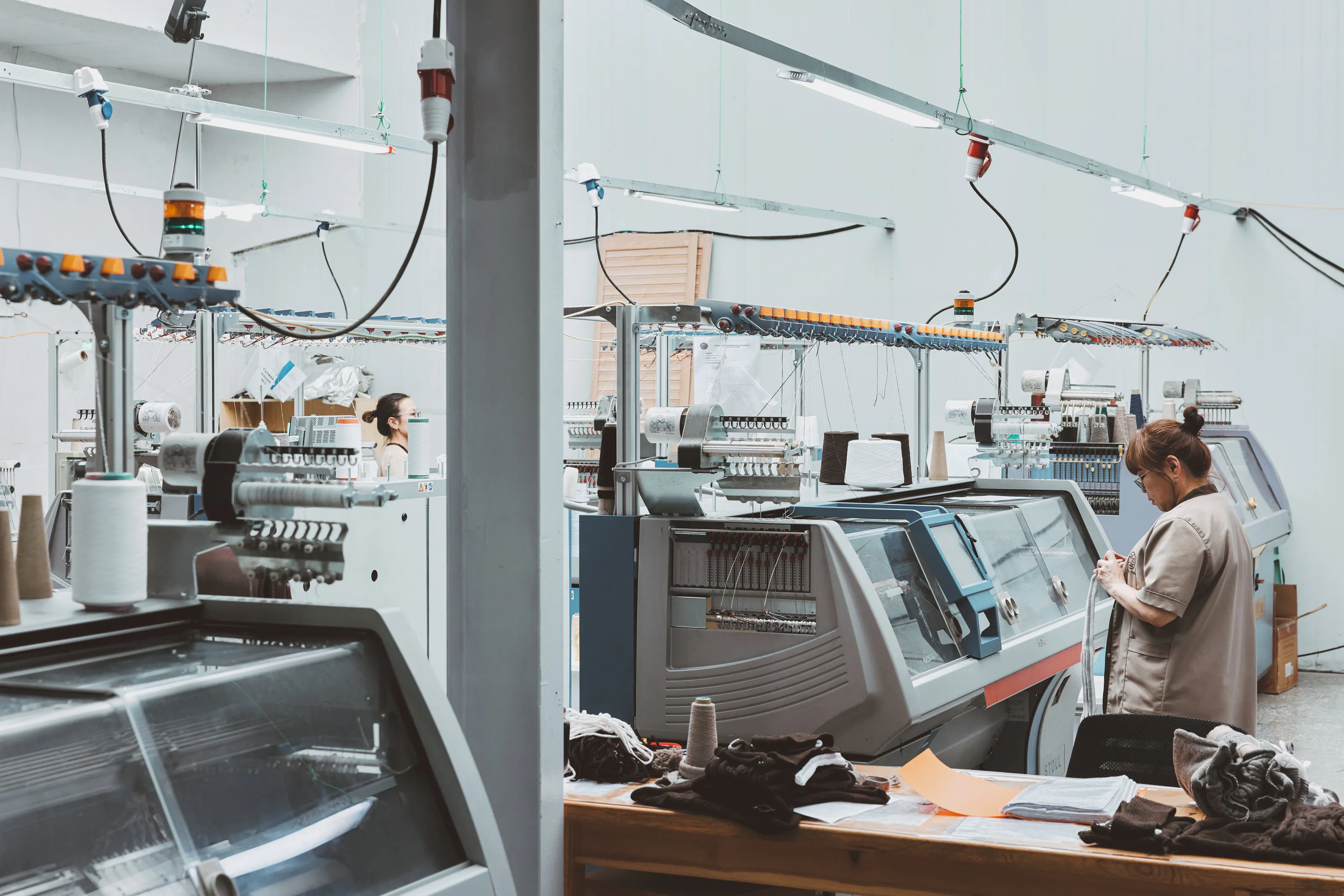
A row of flat knitting machines with an operator.

Knit Mill

Flat knitting, linking and finishing connect the knitted pieces with the completed product.

Assembly and finishing turn knitted pieces into a complete product. Review the finished measurements, stitch appearance and joins together.

Explore flat knitting

Production sequence

The factory workflow

The handoff between stages matters as much as each operation. Changes to the incoming fibre, yarn construction or finish can alter the result further down the route.

  1. Prepared fibre

    Fibre identity, preparation condition and natural shade establish the starting lot. Upstream scouring or dehairing must be distinguished from the factory’s documented dyeing, spinning, weaving, knitting and finishing operations.

  2. Colour where required

    The documented dyeing route colours loose fibre before spinning. Natural-colour work can retain its starting shade; colour development must account for the fibre base and the later textile surface.

  3. Spinning

    Mixing, carding, spinning, rewinding, doubling and twisting connect the fibre lot with the required yarn construction. Yarn can then be supplied separately or continue into the factory’s product-making route.

  4. Weaving or flat knitting

    Warp preparation and weaving create the structure of woven accessories. Flat knitting, followed by linking or making up where required, provides a separate route for knitted products; these are alternatives rather than consecutive stages.

  5. Finishing and final review

    The selected finish develops surface, handle and final dimensions. Review belongs on the completed accessory or knit, since the loom-state textile or unfinished knitted piece does not show the full result.

Light-coloured yarn packages mounted on machine holders.

Production

Manufacturing your product

Our team can explain how materials, construction and finishing relate to your product.