Fibre

Fibre

Camel Wool

The Bactrian camel’s coat links warm, naturally coloured textiles with the pastoral culture of Mongolia’s dry southern regions.

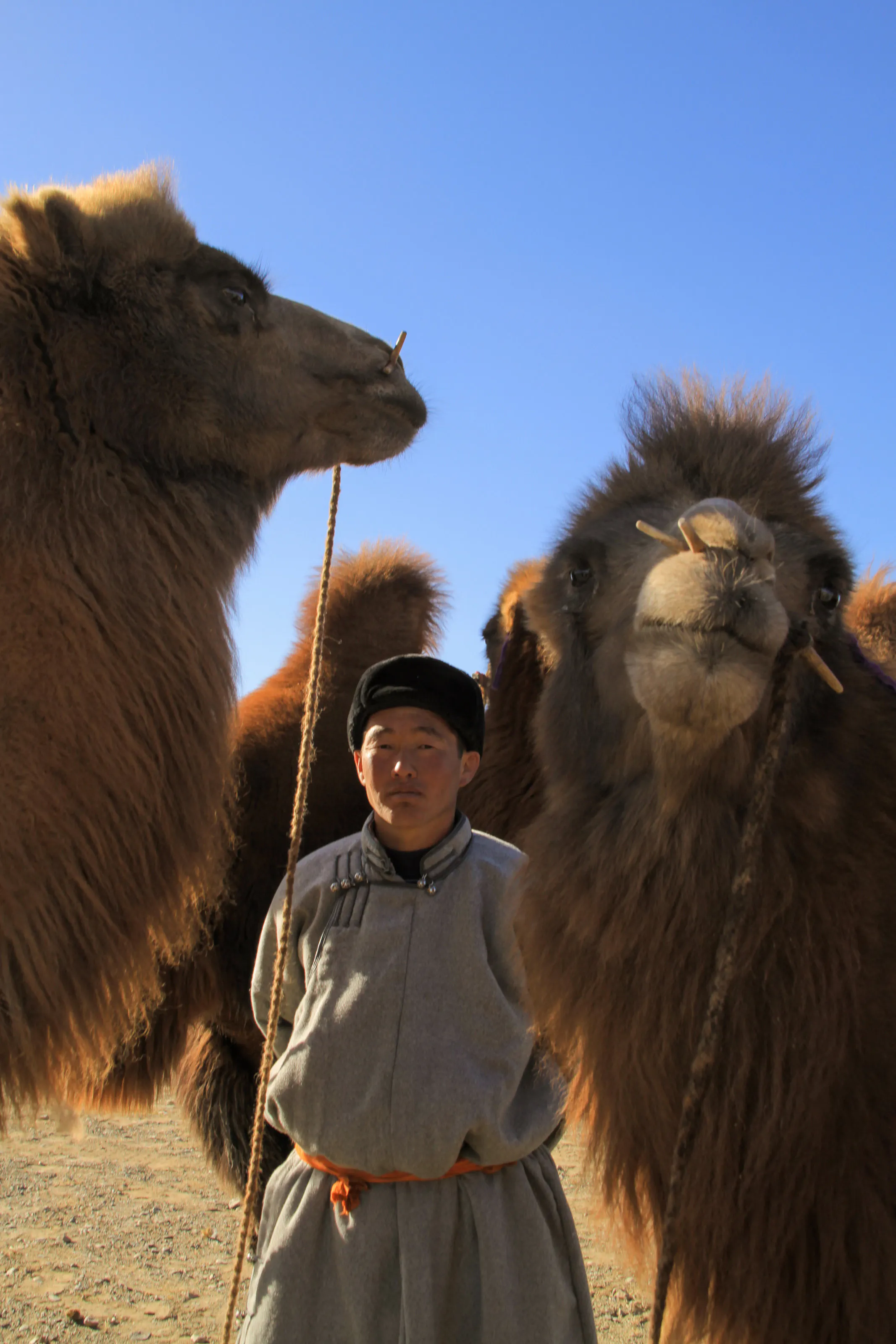
A person standing between camels.

The animal

The two-humped Bactrian camel

The Bactrian camel grows a substantial winter coat with a soft underlayer beneath much coarser outer hair. It sheds that coat in stages as the season changes. Fine camel wool comes from the undercoat, rather than from treating all of the animal’s hair as one material.
Herders and culture

Camels in Gobi life

In the Gobi, the camel’s role extends to milk and transport as well as fibre. The relationship between herders and animals also has a cultural expression in the Mongolian coaxing ritual, which uses song and music to encourage a mother camel to accept a new-born or orphaned calf.

Passed between generations, that practice concerns care, knowledge and community. It offers a specific view of camel herding culture, rather than a claim that every household follows identical practices.

Fibre character

Warmth in natural brown tones

Fine undercoat can provide warmth and a soft, full handle. Shades from light to reddish brown form part of camel wool’s familiar appearance, allowing the animal’s natural colour to remain visible in an undyed textile.

Coarse outer hair has a different character and does not provide the same close-to-skin comfort. The natural brown base is also a limitation when a design depends on very pale or clear bright colours. Camel wool’s strengths are most evident when its warmth, handle and natural palette are part of the design itself.

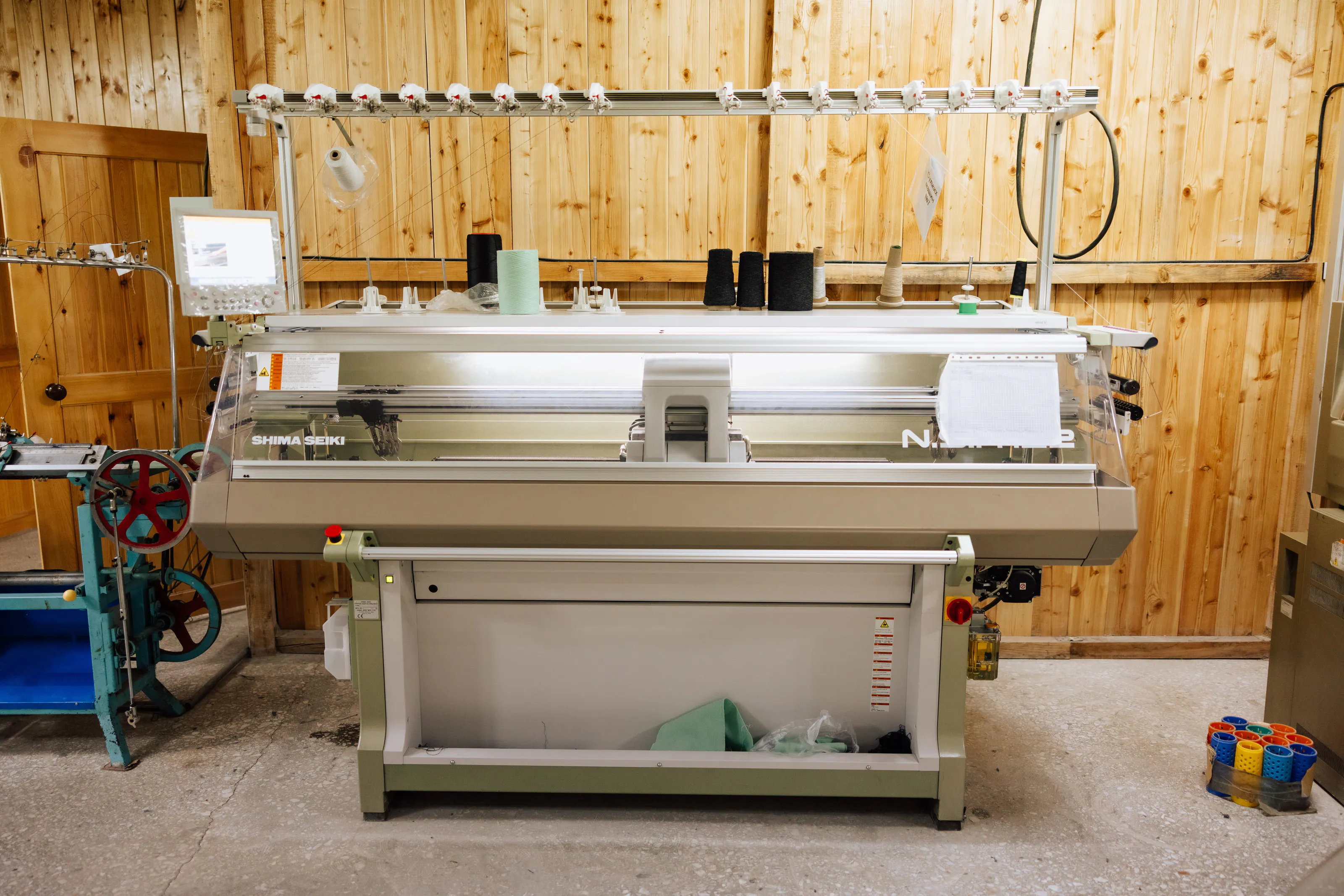
A flat knitting machine with yarn cones above it.

Fibre into product

A product in camel wool

Bring camel wool’s warmth and natural palette into a yarn, knitwear or accessory project.