Fibre

Fibre

Cashmere

The cashmere goat’s fine winter undercoat connects a soft textile with Mongolia’s pastoral economy and the seasonal work of herders.

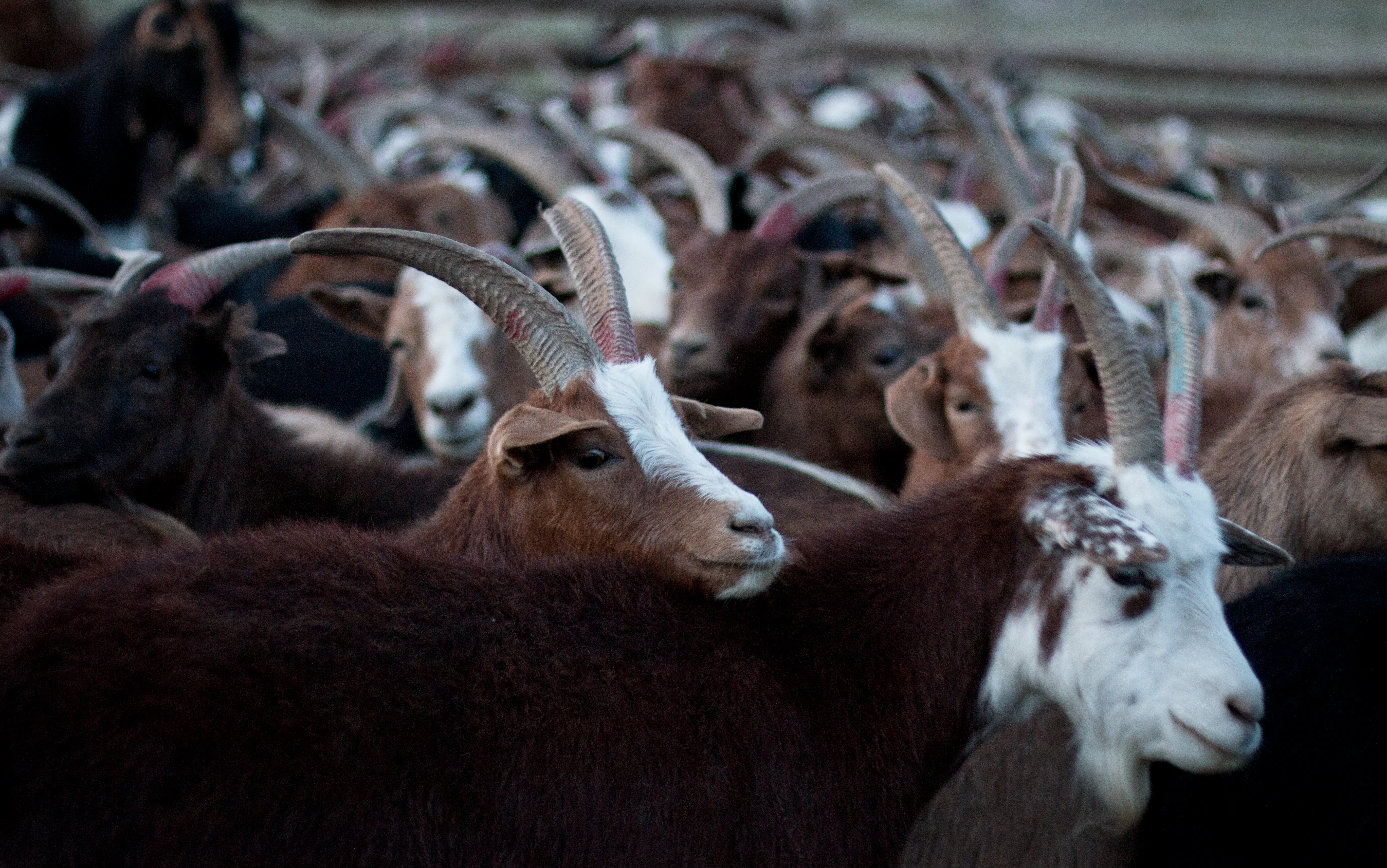
A closely gathered herd of goats.

The animal

The goat beneath the cashmere story

A cashmere goat carries two very different fibres: a fine insulating undercoat and coarser protective outer hair. The down grows for winter and is released with the seasonal moult. Cashmere is that fine fraction, rather than the whole coat.
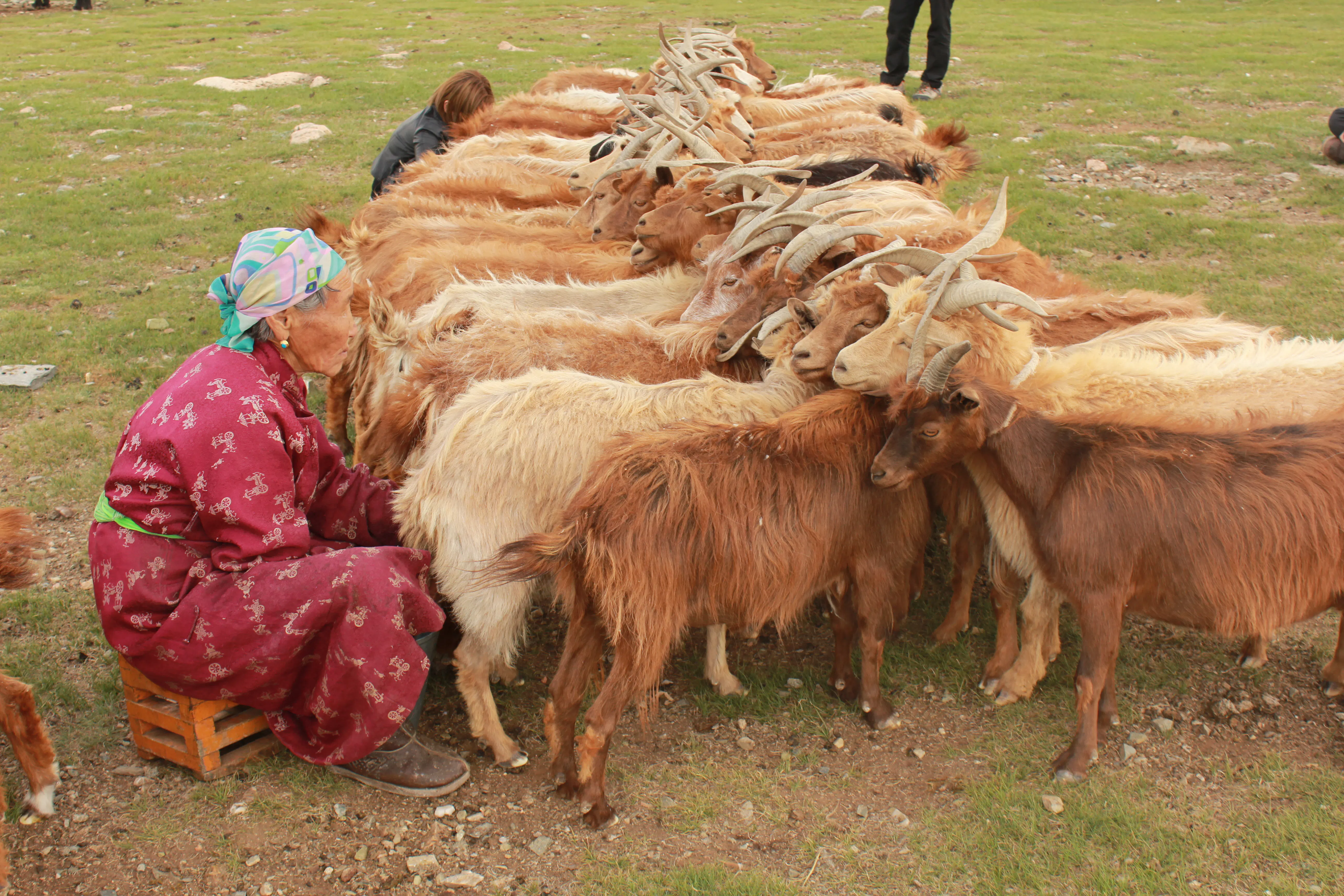
A herder beside a group of goats.

Herders and culture

A seasonal livelihood

For Mongolian herding households, goats are part of a wider livestock livelihood, while cashmere is a valuable source of cash income. The finished fibre therefore has an economic meaning beyond its softness: it connects rural work with a global textile market.

The fibre alone does not tell the whole story of how animals or pastures are managed. Practices vary between households and regions; Mongolian origin is not evidence of a particular welfare or environmental standard.

Fibre character

Softness, with a vulnerable surface

Fine diameter gives cashmere its distinctive soft handle and suitability for light, close-to-skin textiles. The coarse outer hair has a different feel and is separated from the down during preparation.

Softness does not make a surface immune to wear. Rubbing can draw loose fibres into pills, and a fine fibre name does not establish the durability of every yarn or garment. Cashmere’s appeal lies in its softness and warmth; its limitations include the care a soft surface needs in use.

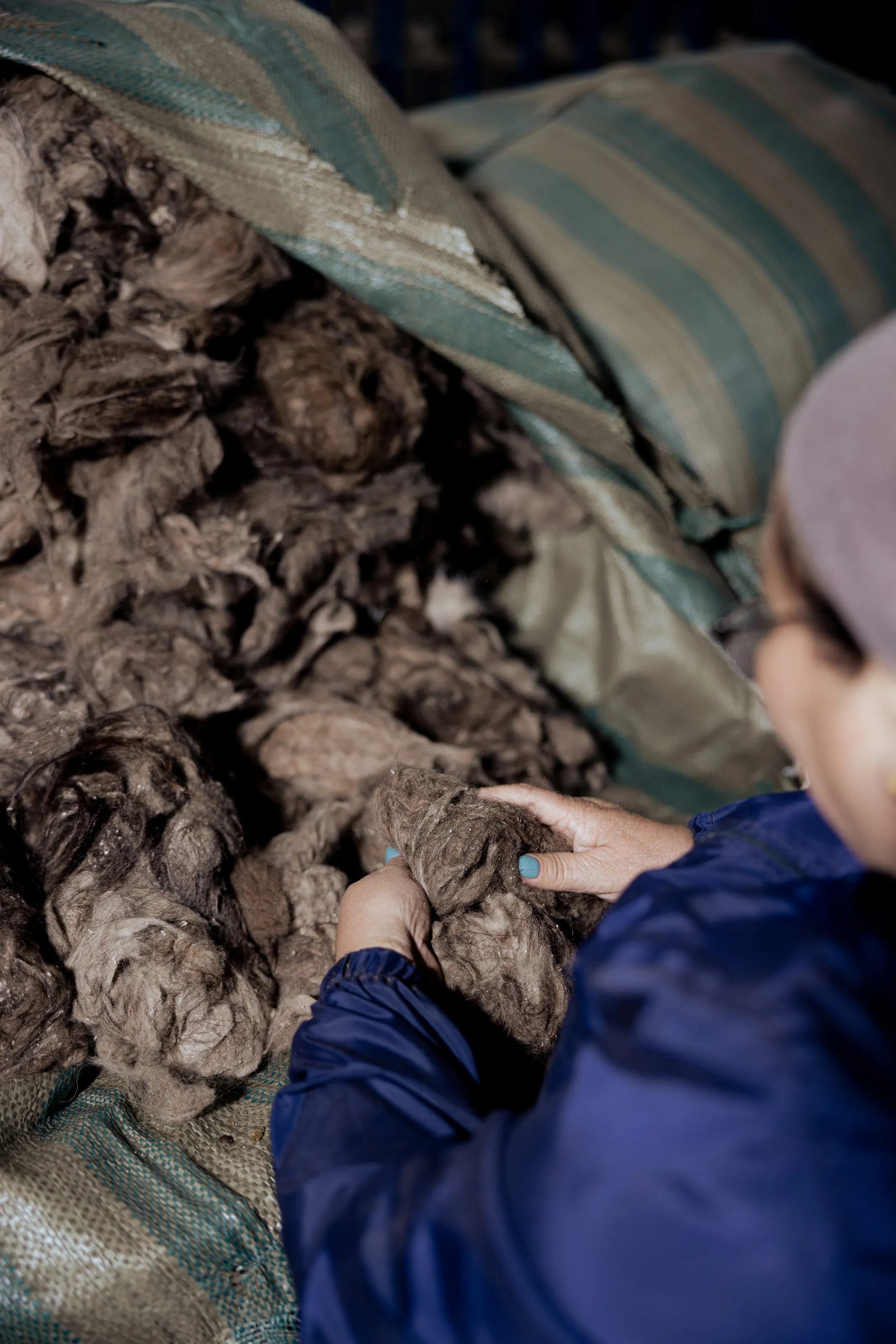
Hands handling loose brown fibre.

Fibre into product

Cashmere in your collection

Explore how this soft undercoat can become yarn, knitwear or a woven accessory.