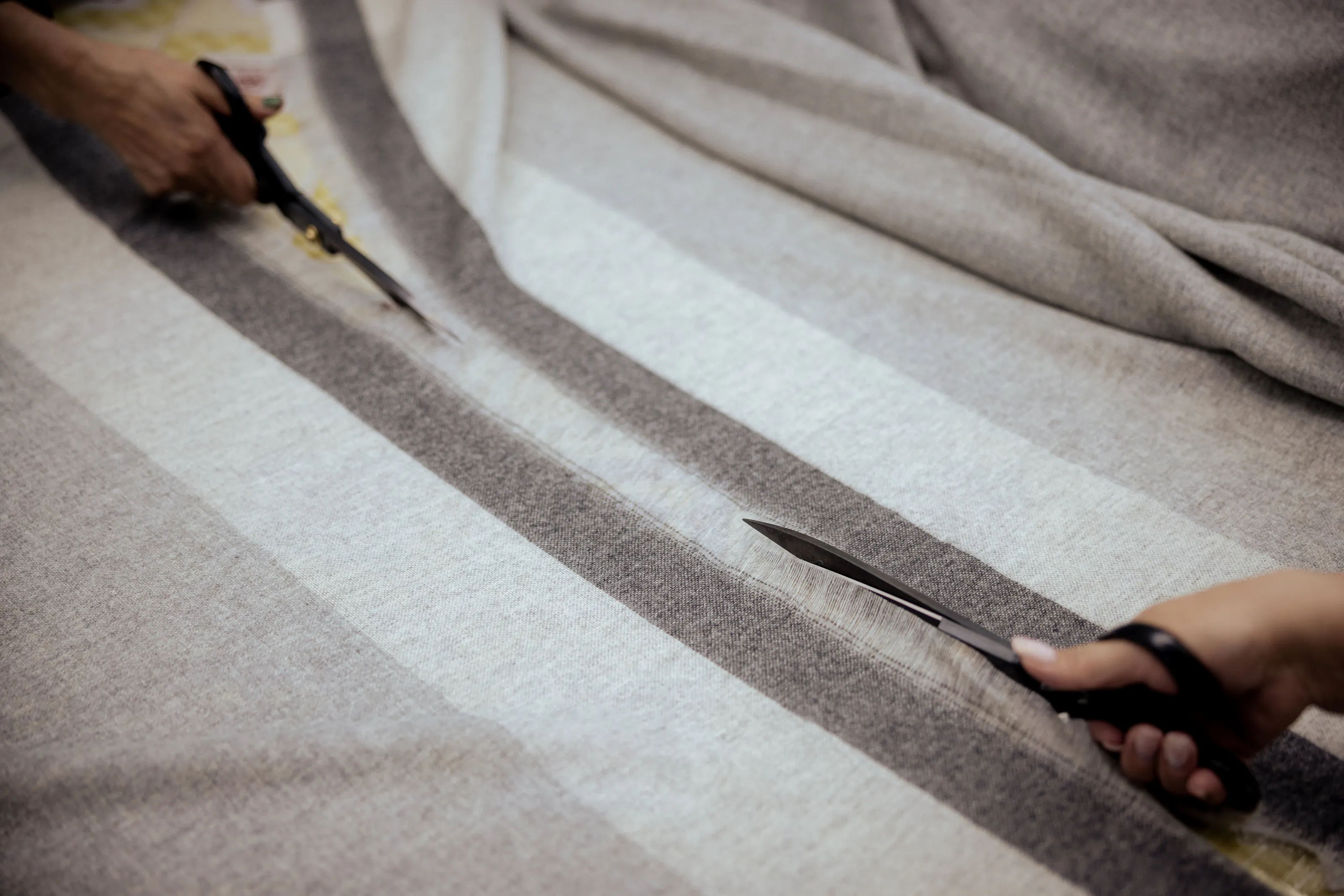
Build a collection under your brand
Private Label ManufacturingFlat-knitted products and woven accessories with your choice of materials, colours and branding.
Explore service
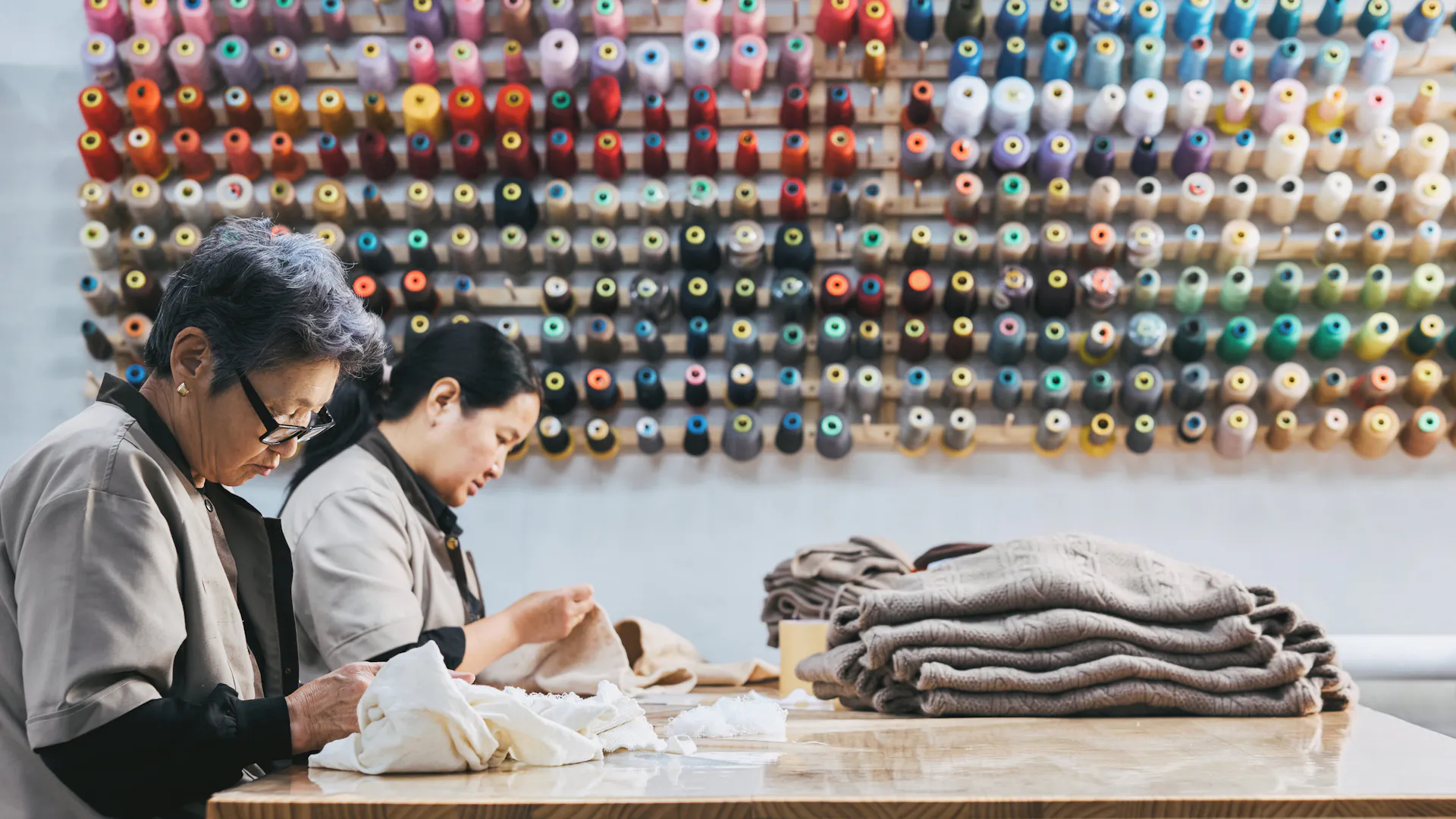
Product development and manufacturing
Start with a collection idea, a product concept or a finished specification. We work on flat-knitted products and woven accessories, with a separate inquiry path for yarn.
Manufacturing services
Private label describes whose brand appears on the product. Original Design Manufacturing (ODM) supports a concept that needs development. Original Equipment Manufacturing (OEM) starts with your design and specification. These services can overlap.
For yarn, tell us about the material and the knitting or weaving process it will be used in.
Flat-knitted products and woven accessories with your choice of materials, colours and branding.
Explore service
Development support for your product concept, from material choices and construction to sample evaluation.
Explore service
Manufacturing of flat-knitted products and woven accessories based on your design and technical specification.
Explore service
Cashmere, yak-down, camel-wool and sheep-wool yarn inquiries for your own knitting or weaving production.
Explore serviceDevelopment stages
The starting point is the product category, intended use and reference design. Any changes to shape, proportions or detailing need to be distinguished from features that should remain the same.
Material, colour, measurements and construction turn a reference into a clear product description. Labels and packaging can then be considered in relation to the finished item.
A sample helps assess how the choices work together. Reviewing its handle, appearance and dimensions is more informative than judging each specification in isolation.
The agreed sample and written details become the product reference. Quantities by style and colour, inspection requirements and delivery arrangements complete the order planning.
Production planning
Order planning depends on the detail of the product, not only the number of pieces. Material requirements, colours, construction and finishing all contribute to the work involved. A change to one of these details may also affect the quotation or schedule.
Development and sample review are separate from bulk production. Allowing time for those decisions helps establish a clear product reference before the production quantity, price and delivery arrangements are agreed.

Manufacturing services
We can help clarify which service suits your product and its stage of development.