The factory’s documented dyeing route colours loose natural fibre before spinning. The starting shade, fibre mix and subsequent yarn and surface development all influence the colour seen in the finished textile.
Factory workflow
Colour through the production route
A loose-fibre colour reference and a finished knitted or woven surface are related checkpoints, with different visual information.
Input and colour route
Working from the fibre’s base shade
The company’s dyeing operation covers sheep wool, cashmere, yak and camel fibre. Colour is developed in relation to the selected fibre and its natural base, with loose fibre as the input to the dyeing route.
Natural-colour products can retain their starting shade. Where colour is introduced before spinning, the dyed fibre becomes the input to mixing and yarn formation, so its identity must carry into the later construction.
Process dependency
From coloured fibre to textile surface
Blending and spinning distribute colour within the yarn; weave, stitch density and surface finishing then alter how that colour is perceived. A brushed accessory and a compact knitted surface need not read identically even when their fibre colour is shared.
A colour change therefore needs to be considered with the actual material and finish. A digital reference alone cannot resolve differences caused by base shade, fibre mixture or surface texture.
Process photograph
Keeping the comparison meaningful
Colour review
Keeping the comparison meaningful
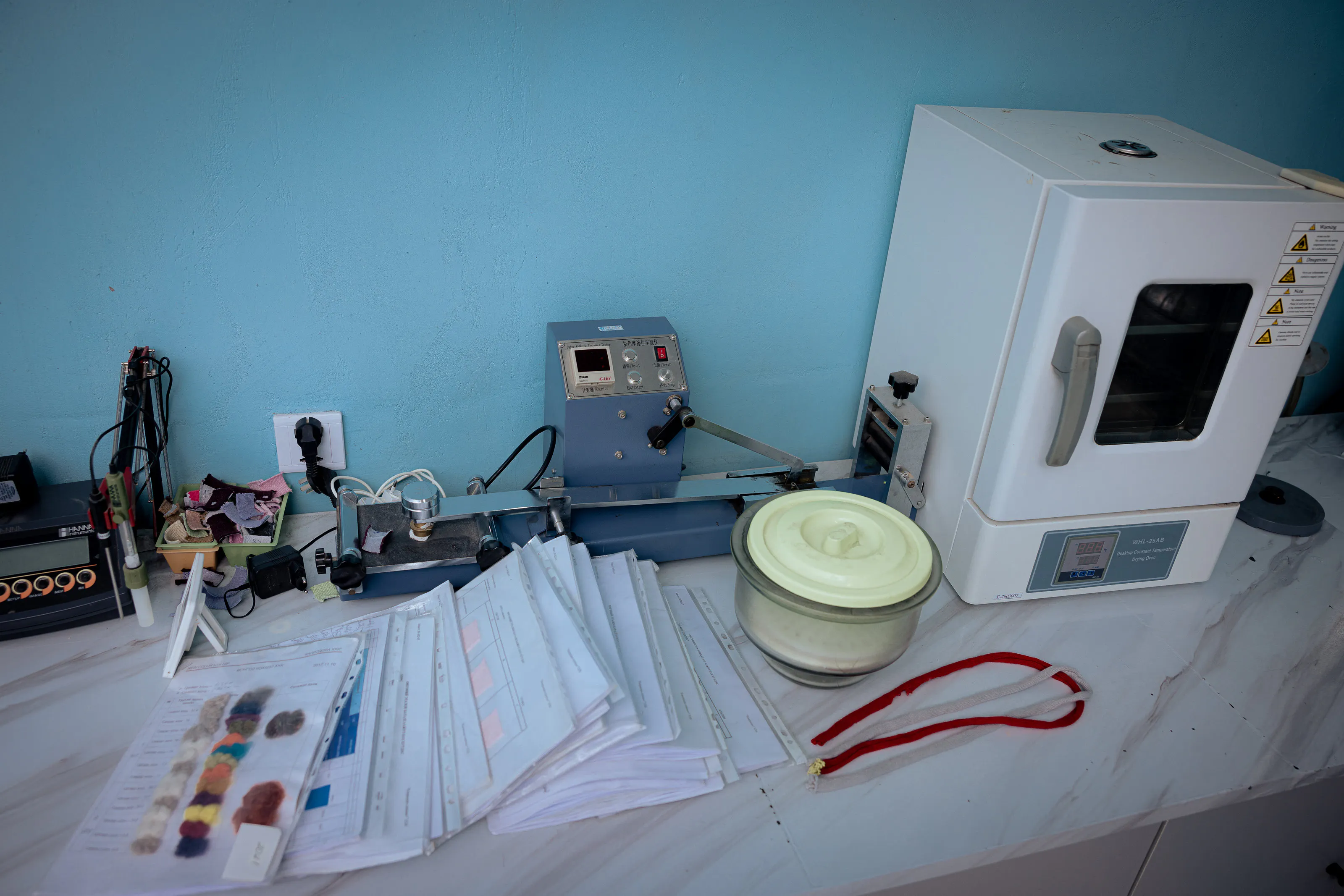
The physical reference, comparison material and viewing conditions need to remain consistent when assessing a shade. Reviewing only loose fibre leaves the effects of yarn construction and finishing unresolved.
Colourfastness requirements concern the intended use and care of the final item. They are separate from visual shade agreement and need to be evaluated for the complete material and construction.
Production
Colour development
We can discuss colour references and how dyeing relates to your material and product requirements.