Yarn to loom
Warp preparation and weaving
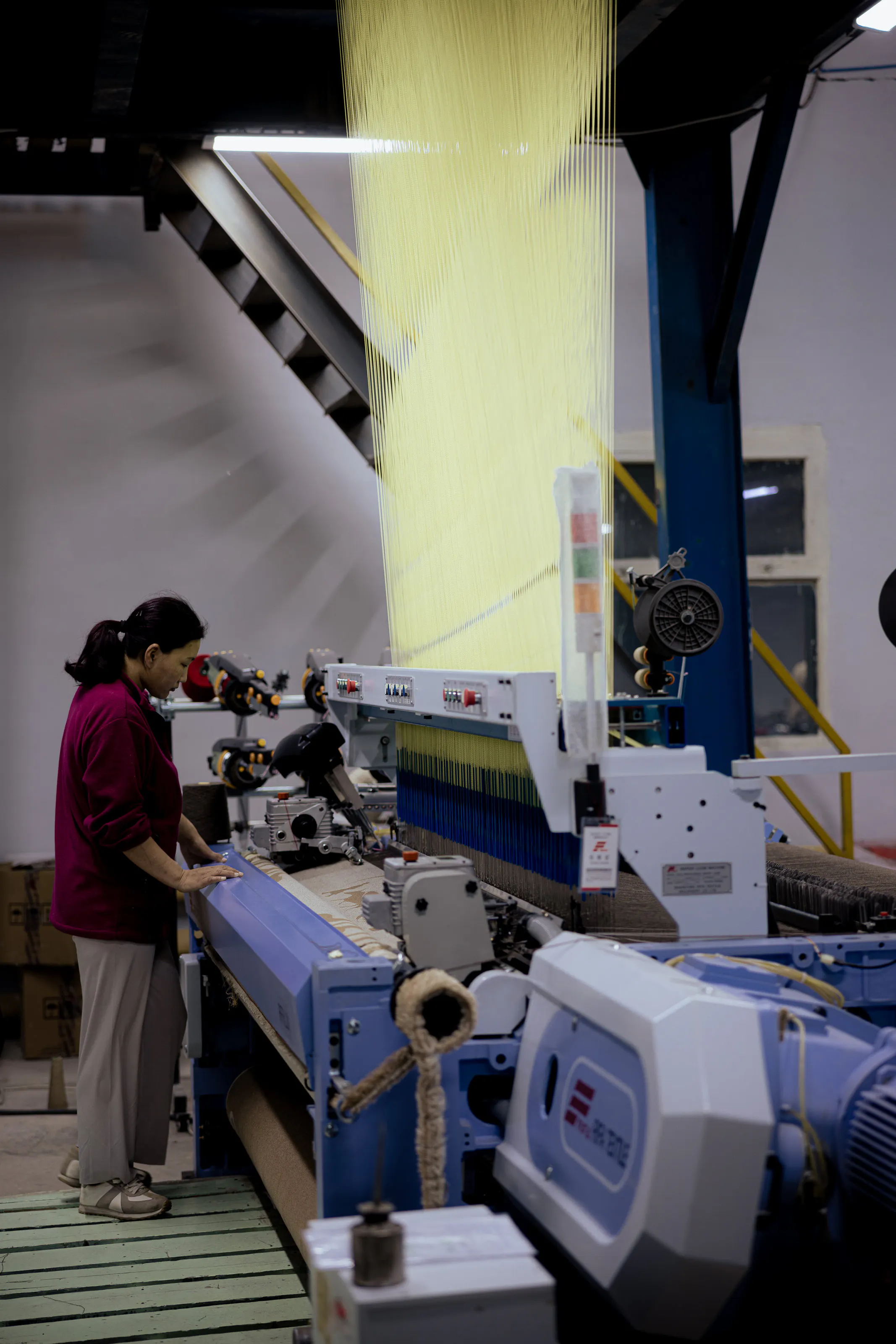
Warp winding is part of the documented factory workflow. Yarn selection, warp and weft colour arrangement and weave construction establish the starting structure for the accessory.
Yarn behaviour and construction density affect how that structure runs and how much body or openness it retains. A weave or colour arrangement cannot be assessed independently of the yarn used to make it.
Surface development
Selecting the finishing route
The documented finishing operations include washing, fulling, raising, steaming and drying. The combination depends on the product; it is not a fixed sequence applied to every accessory.
Fulling develops compactness, while raising develops the surface. These choices affect dimensions, pattern definition, drape and handle, so the loom-state textile is an intermediate rather than the final product reference.
Finished output
Dimensions, surface and edges together
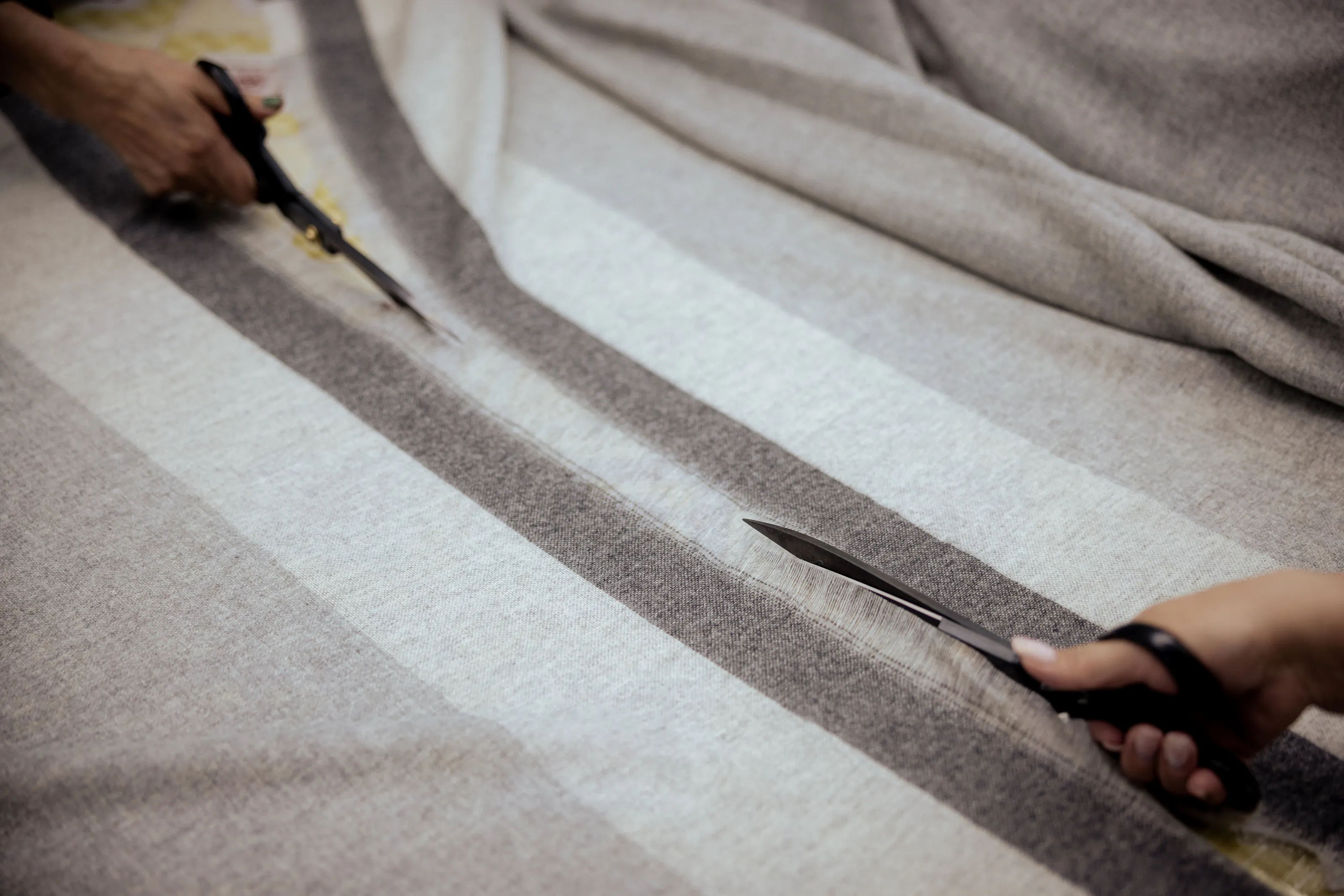
The useful comparison is the accessory after its intended finish, including its edges. Finished dimensions and surface appearance need to be considered together because a fuller or more raised finish can change both.
Pattern clarity, colour appearance and edge treatment remain part of that review. An attractive unfinished swatch does not by itself establish the behaviour of the completed accessory.